
Norway for First-Timers: Where Should You Go?
Quick Answer
For a first trip, aim for the Oslo, Bergen, fjords corridor: two days in Oslo, three to four days in the fjord region around Flåm, Aurland or Hardanger, and two to three days in Bergen. That combination gives you cities, mountains, water and rail journeys without the exhausting cross-country logistics that trip up a lot of first-timers. If you have ten days or more, add Ålesund, Stavanger or a taste of the Arctic, but keep one region as your anchor rather than chasing the whole country in a week.
Key Takeaways
- Oslo, the fjords, and Bergen form the core route for most first-time visitors to Norway, and this trio covers cities, scenery and culture in one manageable loop.
- Seven days is the sweet spot for a first trip; ten to fourteen days lets you add Ålesund, Stavanger or a short Arctic extension.
- Pick one region per trip. Trying to combine the southern fjords with Lofoten and Tromsø in a single short holiday usually means more time in transit than in places you actually want to be.
- Northern lights and fjords are different trips, not two halves of the same itinerary, decide which one matters more to you before you book.
- Norway is genuinely expensive, and 2026's new visitor-contribution charges in busy areas add another line to your budget.
- Self-driving works well outside peak season, but Norway's train, bus and ferry network is strong enough that you don't need a hire car to see the highlights.
- Oslo suits city-and-culture travellers; Bergen suits fjord-first travellers, most first-timers benefit from including both.
- Booking ahead matters more than ever in 2026, with record visitor numbers pushing accommodation and popular excursions to sell out earlier each year.
What Are the Must-See Places in Norway for First-Time Visitors?
The must-see places for a first Norway trip are Oslo, the western fjord region around Flåm and Aurland, and Bergen. Between them, these three spots give you the capital's museums and harbour life, the country's most photographed fjord scenery, and a historic port city with its own personality.
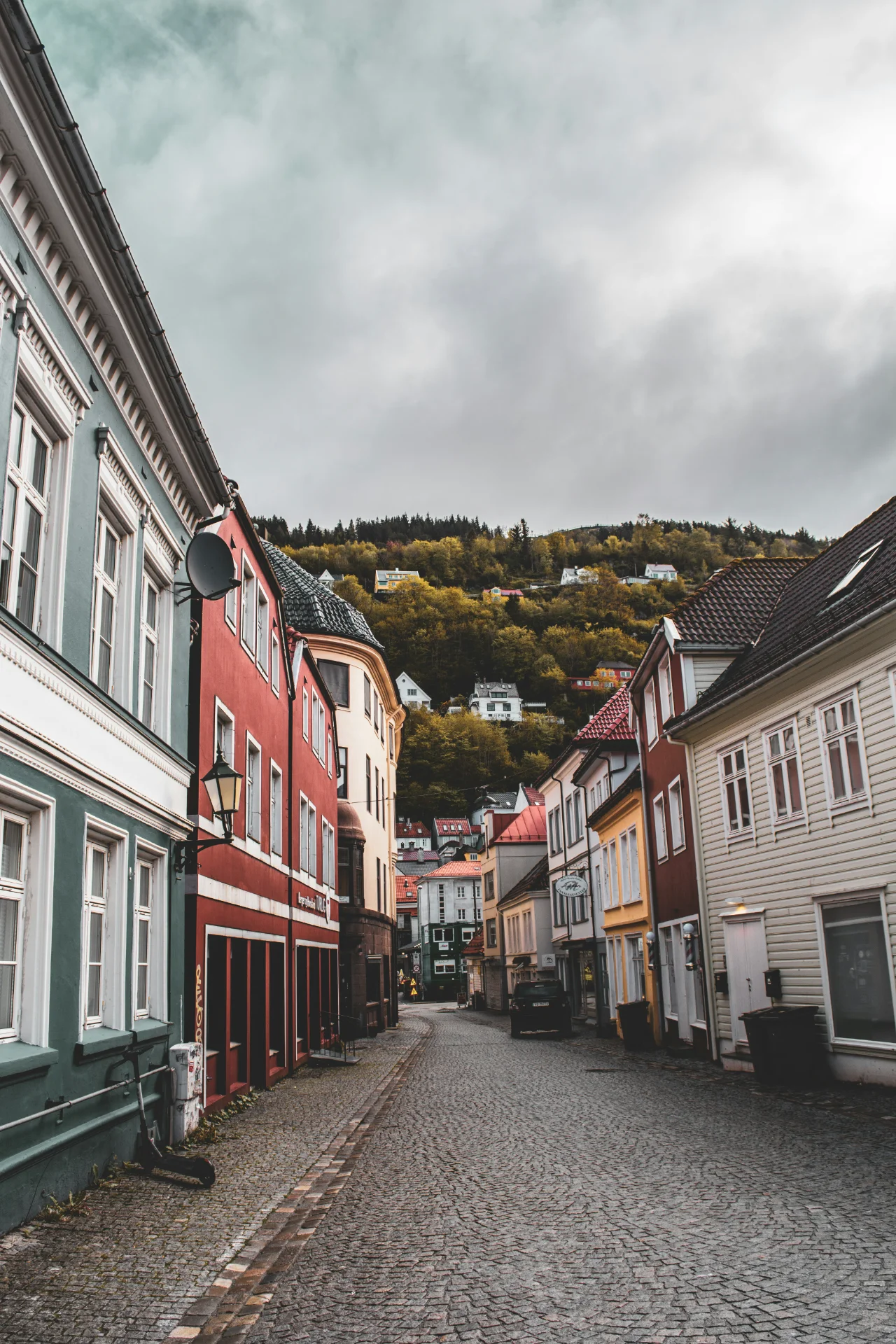
Oslo works as your arrival point and gives you the Viking Ship Museum, the Opera House waterfront and easy day trips before you head west. From there, most first-timers cross into fjord country through Hardanger or Sognefjord, using Flåm as a base for the UNESCO-listed Nærøyfjord. Bergen closes the loop as the best base if fjords are your main reason for visiting, thanks to its position at the mouth of several fjord arms and its lively Bryggen wharf district.
If you have longer than a week, Ålesund's Art Nouveau streets and Geirangerfjord make a strong add-on, and Stavanger opens the door to Lysefjord and Pulpit Rock. I've mapped a version of this route in detail in a 9-day Norway itinerary covering Oslo, Flåm, the fjords and Bergen, which is the structure I use most often when planning first trips for UK clients.
Choose this route if: you want a first trip that balances scenery, culture and manageable travel times without needing a hire car for the whole journey.
Best Time of Year to Visit Norway as a Beginner
Summer, roughly late May to early September, is the easiest season for a first Norway trip because attractions run at full capacity, days are long, and driving conditions are straightforward. Winter suits a different kind of first-timer, one chasing the northern lights rather than fjord scenery.
Here's how the two main seasons compare for someone visiting for the first time:
| Factor | Summer (May–Sep) | Winter (Nov–Mar) |
|---|---|---|
| Daylight | Long days, midnight sun in the north | Short days, polar night in the far north |
| Main draw | Fjords, hiking, scenic rail | Northern lights, snow activities |
| Driving | Straightforward on main routes | Winter tyres and caution needed |
| Crowds | Higher in July, August | Lower except around holidays |
Official visitor figures show just how much this season split has shifted: [Life in Norway's guide for first-time visitors][0] notes that cooler-season and winter tourism has grown sharply as travellers look for milder temperatures and aurora chances, alongside the traditional summer rush.
Common mistake: assuming summer is always cheaper or quieter. July and August now see the heaviest crowds and the highest prices in fjord towns, so late May, June or September often give a calmer, better-value first trip.
How Many Days Do You Need in Norway for a First Trip?
Seven days is enough for a satisfying first trip covering Oslo, the fjords and Bergen. Ten to fourteen days lets you add a second region, such as Ålesund, Stavanger, or a short Arctic extension, without feeling rushed.
A rough breakdown that I use when planning for clients:
- 5-6 days: Oslo plus one fjord base (Flåm or Hardanger). Skip Bergen or make it a quick overnight.
- 7 days: The classic Oslo, fjords, Bergen loop, giving each stop two to three full days.
- 10 days: Add Ålesund and Geirangerfjord, or Stavanger and Lysefjord, to the seven-day core.
- 14+ days: Combine the southern loop with Lofoten, Senja or Tromsø as a genuinely separate second leg.
Edge case: if you only have four or five days and still want fjords, base yourself in Bergen or Flåm and treat Oslo as a one-night stopover rather than a full stay, better to see less well than everything badly.
Norway Itinerary: One Week for a First-Time Visitor
A one-week Norway itinerary for first-timers typically runs Oslo (days 1-2), the fjords via Flåm and Aurland (days 3-5), and Bergen (days 6-7). This structure uses the "Norway in a Nutshell" combination, the Bergen Railway, the steep Flåm Railway and a fjord cruise, as the connective spine.
Here's how a typical week breaks down:
- Day 1-2, Oslo: City orientation, museums, harbour walk, one day trip if time allows.
- Day 3, travel day: Train from Oslo to Myrdal, then the Flåm Railway down to Flåm.
- Day 4, Flåm and Nærøyfjord: Fjord cruise, short hikes, overnight in Flåm or Aurland.
- Day 5, Hardanger or Voss: A quieter fjord arm or a stop at Voss on the way toward Bergen.
- Day 6-7, Bergen: Bryggen wharf, the fish market, funicular up Fløyen, and a slower final day before flying home.
This route pairs well with the wider [Scandinavia travel itinerary for first-timers][1] if you're tempted to bolt on a few days in Stockholm or Copenhagen either side.
Decision rule: choose this exact week if fjords matter more to you than the far north. If the northern lights are the priority, this itinerary isn't the one you want, see the next section.
Northern Lights vs Fjords: Which Should You Prioritise?
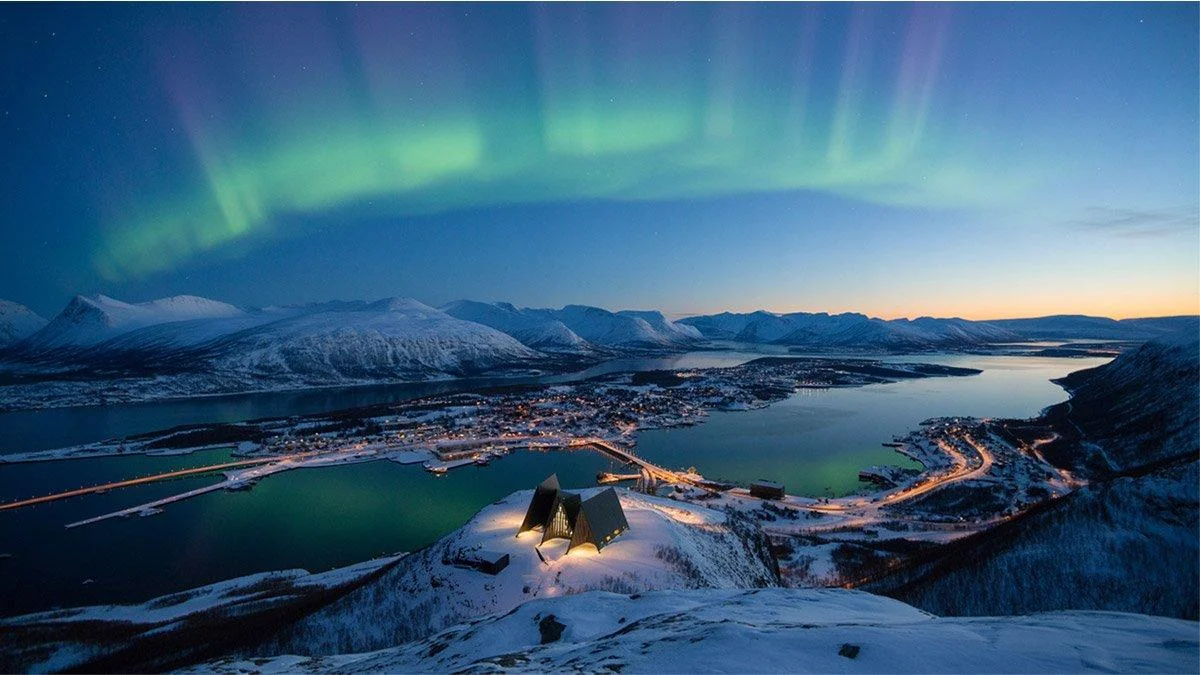
Fjords and northern lights are two different Norway trips, not two parts of the same one. Prioritise fjords if you're travelling between May and September; prioritise the northern lights if you're travelling between roughly late September and March and are willing to base yourself further north.
The fjord route (Oslo, Flåm, Bergen) is a summer-leaning, culture-and-scenery trip. Northern lights hunting works best from Tromsø, the Lofoten Islands or Senja, all of which sit well north of the fjord region and require either a domestic flight from Oslo or a longer overland journey. Trying to fit both into one short trip usually means a rushed few hours in each place rather than a proper stay anywhere.
I've written more on planning this specific decision in a guide to a [northern lights trip to Norway from the UK][2], which covers timing, location choice and how to build realistic aurora chances into a short holiday.
Choose fjords if: this is your first Norway trip and you want scenery, rail journeys and manageable logistics. Choose the northern lights if: aurora sightings are your main goal and you're prepared to fly further north and travel in the colder months.
Is Norway Expensive for Tourists, and How Much Should You Budget?
Yes, Norway is one of the pricier destinations in Europe for food, drink and accommodation, and a new visitor-contribution charge in some municipalities adds a further cost from 2026 onward. Budgeting generously for meals and pre-booking transport and key excursions makes the biggest difference to overall cost.
A few things shape the budget conversation:
- Eating out costs noticeably more than in the UK, particularly for alcohol; many visitors save by shopping at supermarkets for lunches.
- Accommodation in Oslo, Bergen and fjord towns fills up fast in peak months, which pushes prices up the closer you book to travel.
- The new tourist tax, which came into force in July 2026, allows municipalities under heavy tourism pressure, Lofoten and Tromsø among the first expected to apply it, to add up to roughly 3% onto accommodation bills.
- Transport booked in advance (trains, the Flåm Railway, fjord cruises) is generally cheaper than buying on the day.
Common mistake: underestimating food costs and only budgeting for flights and hotels. Building a daily food allowance into your planning avoids an unpleasant surprise partway through the trip.
Can You Drive Yourself in Norway, or do you need a supervised tour guide?
You can drive yourself in Norway outside of winter without much difficulty, since roads on the main tourist routes are well maintained and signposted. In winter, or if you'd rather not manage mountain passes and ferry timings yourself, a guided or semi-guided itinerary removes that pressure. Either way, the weather even in the most Northern parts of Norway will not be as bad as the North Pole, for instance.
Self-driving suits travellers who want flexibility and are comfortable with occasional tunnels, ferries and narrower mountain roads. It works particularly well between May and September, when road conditions are at their easiest. Winter driving in Norway demands winter tyres, extra caution on mountain passes, and a realistic view of shorter daylight hours.
A guided or partly guided approach, using a fixed itinerary like Norway in a Nutshell, or a fully tailor-made plan booked through an agent, takes the logistics off your plate. That's often the better option for a first trip, since it removes the guesswork around ferry timetables, parking in fjord villages and where to safely stop for photos.
Decision rule: self-drive if you're confident with mountain roads and travelling outside winter. Choose a planned itinerary or guided legs if this is your first Nordic trip, you're travelling in winter, or you'd simply rather not spend holiday time working out logistics.
Oslo vs Bergen: Which City Should First-Timers Visit?
Include both if you can, Oslo suits travellers who want capital-city culture and an easy international gateway, while Bergen suits those whose main goal is fjord scenery. Official Norwegian tourism data show Oslo accounts for roughly 30% of the country's overnight stays and Bergen around 7%, reflecting their different roles as gateway city versus fjord base.
Oslo gives you world-class museums, a walkable harbour, and the country's busiest international flight connections. Bergen gives you a smaller, more atmospheric old town, direct access to Hardanger and Sognefjord, and the starting point for many fjord cruises. If you can only pick one city and fjords are your priority, choose Bergen. If culture and convenience matter more, or you're short on time, Oslo alone still makes a solid first trip when paired with one nearby fjord day trip.
For a fuller picture of how the two cities and the fjords fit together, my [Norway destination guide for UK travellers][4] walks through practical details like flight routes, seasonal considerations and where to base yourself.
How Do You Get Around Norway Without a Car?
Norway's trains, long-distance buses and fjord ferries connect all the main first-timer stops well enough that you don't need to hire a car. The Bergen Railway, the Flåm Railway and scheduled fjord cruises form a reliable backbone for exactly the Oslo, fjords, Bergen route most beginners follow.
Practical options include:
- The Bergen Railway for the scenic Oslo-to-Bergen crossing, one of Europe's most photographed rail journeys.
- The Flåm Railway, a short but dramatic descent through the mountains to the fjord.
- Fjord cruises and ferries, including the electric boats now running on Nærøyfjord, which link villages that have no direct road access.
- Domestic flights if you're adding a northern extension, since Oslo to Tromsø or Bodø by air is far quicker than overland travel.
Quick example: a traveller without a car can go Oslo (train) Myrdal (Flåm Railway) Flåm (fjord cruise) Gudvangen (bus) Voss (train) Bergen, seeing the same highlights a self-drive trip would, just on a fixed schedule.
Common Mistakes First-Time Visitors Make in Norway
The most common mistake first-timers make is trying to cover too much ground in too little time, which turns a holiday into a string of transfers. Underestimating costs, booking accommodation too late, and confusing summer and winter itineraries follow close behind.
Watch out for these:
- Combining fjords, Lofoten and Tromsø on a single short trip. One region per week is a far more realistic rule than most people expect.
- Booking accommodation late. Record visitor numbers in recent years mean popular fjord towns and Bergen hotels sell out earlier each season.
- Ignoring the new visitor-contribution charge in busy municipalities, which can add a noticeable amount to an accommodation bill in hotspots like Lofoten and Tromsø.
- Assuming public transport is limited. In fact the rail and ferry network covers the main first-timer route thoroughly.
- Skipping travel insurance and passport checks. Always confirm your passport's expiry date well ahead of departure and check the UK government's foreign travel advice for Norway before you go.
Is It Better to Visit Norway Independently or With a Tour Group?
Neither option is universally better, independent travel suits confident planners who want flexibility, while a tailor-made itinerary planned with local insight suits travellers who want the same freedom without doing all the legwork themselves. A fixed group tour suits those who'd rather have every decision made for them.
Fully independent travel gives you total control over pace and stops, but it means booking every train, ferry and hotel yourself, and researching seasonal quirks like ferry timetable changes. A group tour removes all planning but locks you into someone else's schedule and companions. A tailor-made itinerary, planned around your travel style, interests and pace, with the practical bookings handled for you, sits between the two, and it's the model I use for most first-time Norway clients, because it keeps the flexibility of independent travel while removing the risk of getting logistics wrong on an unfamiliar route.
Handpicked Nordic experiences and practical travel arrangements booked through an ATOL-protected agent also mean you're covered if something changes. That financial protection matters more than people expect on a trip involving multiple flights, trains and fjord crossings.
What Hidden Gems in Norway Do Most Tourists Miss?
Most tourists miss the quieter fjord arms away from the main cruise routes, smaller towns like Aurland and Undredal, and the Hardangerfjord region, which sits just south of the more heavily visited Sognefjord. These spots deliver the same scenery with far fewer crowds.
A few worth building into a first trip:
- Undredal, a tiny goat-cheese village on Aurlandsfjord, reachable by a short ferry or road trip from Flåm.
- Hardangerfjord, known for its orchards and quieter villages, and often overlooked in favour of Sognefjord.
- Ålesund's back streets, away from the harbour-front Art Nouveau buildings most visitors photograph and leave.
- Trolltunga or Kjeragbolten hikes, for travellers with an extra day and decent fitness, offering views far beyond the standard fjord-cruise photo stop.
You'll find more destination-specific ideas across the wider [Norway blog covering Scandinavia and Nordic travel inspiration][5], where I add new finds as I discover them on my own trips.
Not sure where to start?
I help UK travellers put together tailor-made Nordic and Scandinavian holidays, planned with local insight from my base in Helsinki. If you'd like a Norway itinerary built around your own travel style, interests and pace, get in touch and I'll take it from there. Book with confidence, every flight inclusive trip I arrange from the UK is planned with ATOL-protected security behind it, where required.
Conclusion
A first trip to Norway works best when you pick one region and go deep rather than trying to see the whole country in one go. Oslo, the fjords around Flåm, and Bergen give you the strongest introduction: enough culture, enough scenery, and a manageable route by rail and ferry. If the northern lights are your real reason for going, treat that as a separate trip focused on Tromsø, Lofoten or Senja, ideally in the colder months.
My own approach with clients is straightforward, I ask about your travel style, interests and pace before suggesting a single route, then handle the practical travel arrangements so you're not juggling ferry timetables and hotel bookings on your own. If you'd like help turning any of the routes above into a real, bookable itinerary, drop me a message and I'll start putting together options based on local knowledge from Finland and the wider Nordic region.
Frequently Asked Questions
Do I need to speak Norwegian to travel in Norway? No. English is widely spoken across hotels, restaurants and transport in Oslo, Bergen and the main fjord towns, so language is rarely a barrier for UK visitors.
Is Norway safe for first-time visitors travelling alone? Yes, Norway is generally considered a safe destination, though it's still worth checking the UK government's foreign travel advice for any current guidance before you go.
What's the cheapest way to see Norway's fjords? Public ferries and the standard Bergen, Flåm rail and cruise combination are usually cheaper than private tours, and booking these legs online in advance helps keep costs down.
Can I see the northern lights from Bergen or Oslo? It's unlikely and unreliable this far south. Reliable aurora chances require travelling further north, to areas like Tromsø, Lofoten or Senja, during the darker months.
Should first-timers visit Norway in July? July offers long days and full seasonal opening hours, but it's also the busiest and most expensive month, so June or September often give a calmer first trip at a similar level of daylight.
How far in advance should I book a Norway trip? Given record visitor numbers in recent years, booking accommodation and key rail or cruise legs several months ahead is a sensible approach, especially for July and August travel.
Is the Norway in a Nutshell route worth it for first-timers? Yes, it's a well-tested combination of train, fjord cruise and bus that hits the most photographed scenery with minimal planning effort, making it a strong fit for a first trip.
Do I need a 4x4 to drive in Norway? No, a standard rental car handles the main tourist routes fine outside winter. Winter driving is a different situation and benefits from local advice or a guided alternative.