
The Best Nordic Christmas Markets for a Festive Winter Break from the UK
Last updated: October 7, 2026
Quick Answer
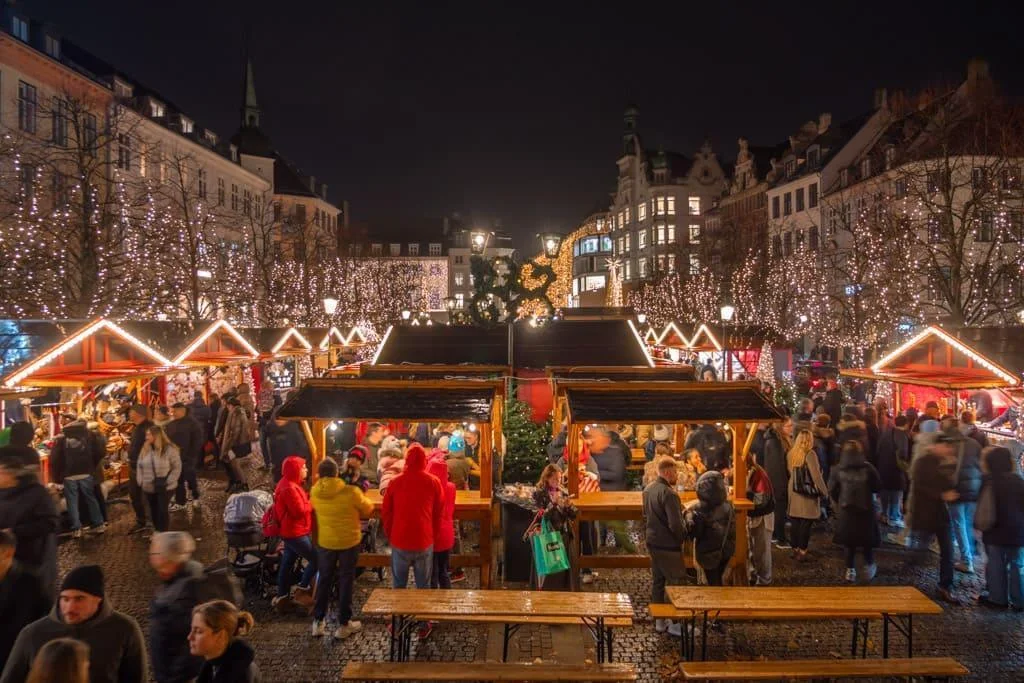
The best Nordic Christmas markets for a festive winter break from the UK are Helsinki's Tuomaan Markkinat on Senate Square, Stockholm's Stortorget market in Gamla Stan, Oslo's Jul i Vinterland at Spikersuppa, Copenhagen's Tivoli Gardens, and Reykjavík's Yule Town by the old harbour. All five are reachable on direct flights from the UK in under four hours, run from late November until shortly before or after Christmas, and sit within walking distance of the city centre. Expect to budget roughly £450 to £900 per person for three nights including flights, depending on city and dates.
Key Takeaways
- Helsinki offers the most authentically Finnish market, complete with a public sauna in Senate Square and Tuomaan Markkinat's handmade-only stall policy.
- Stockholm's Stortorget in Gamla Stan is Scandinavia's most photographed Christmas square, with Skansen's open-air museum market offering the traditional, folk-heritage version.
- Copenhagen is the strongest choice for families, thanks to Tivoli Gardens' rides, lights and indoor warmth.
- Oslo gives you a free outdoor ice rink, a Ferris wheel and the easiest market to combine with northern lights travel.
- Reykjavík is the quirkiest, with 13 Yule Lads instead of one Santa and the Hafnarfjörður Christmas Village nearby.
- Most Nordic markets open the last weekend of November and close between 23 and 30 December.
- Two markets in one trip is realistic; three is rushed unless you use the overnight Stockholm, Helsinki ferry.
- Pack for -5°C to -15°C with wind: merino base layers, waterproof boots with grip, and ice cleats.
- Weekday mornings and the first week of December are noticeably quieter than mid-December weekends.
- A protected package booking covers your flights, hotel and transfers in one place, with ATOL and Protected Trust Services behind it.
What are the best Christmas markets in Scandinavia and the wider Nordics?
The best Nordic Christmas markets combine genuine local craft, proper regional food and a walkable city centre. Five stand out for UK travellers: Helsinki, Stockholm, Oslo, Copenhagen and Reykjavík. Each has a distinct character, which matters more than size when you only have a long weekend.
I live in Helsinki, and I have spent my fair share of Christmas periods walking these squares with a cup of Glögi in hand, here is my honest assessment of each market:
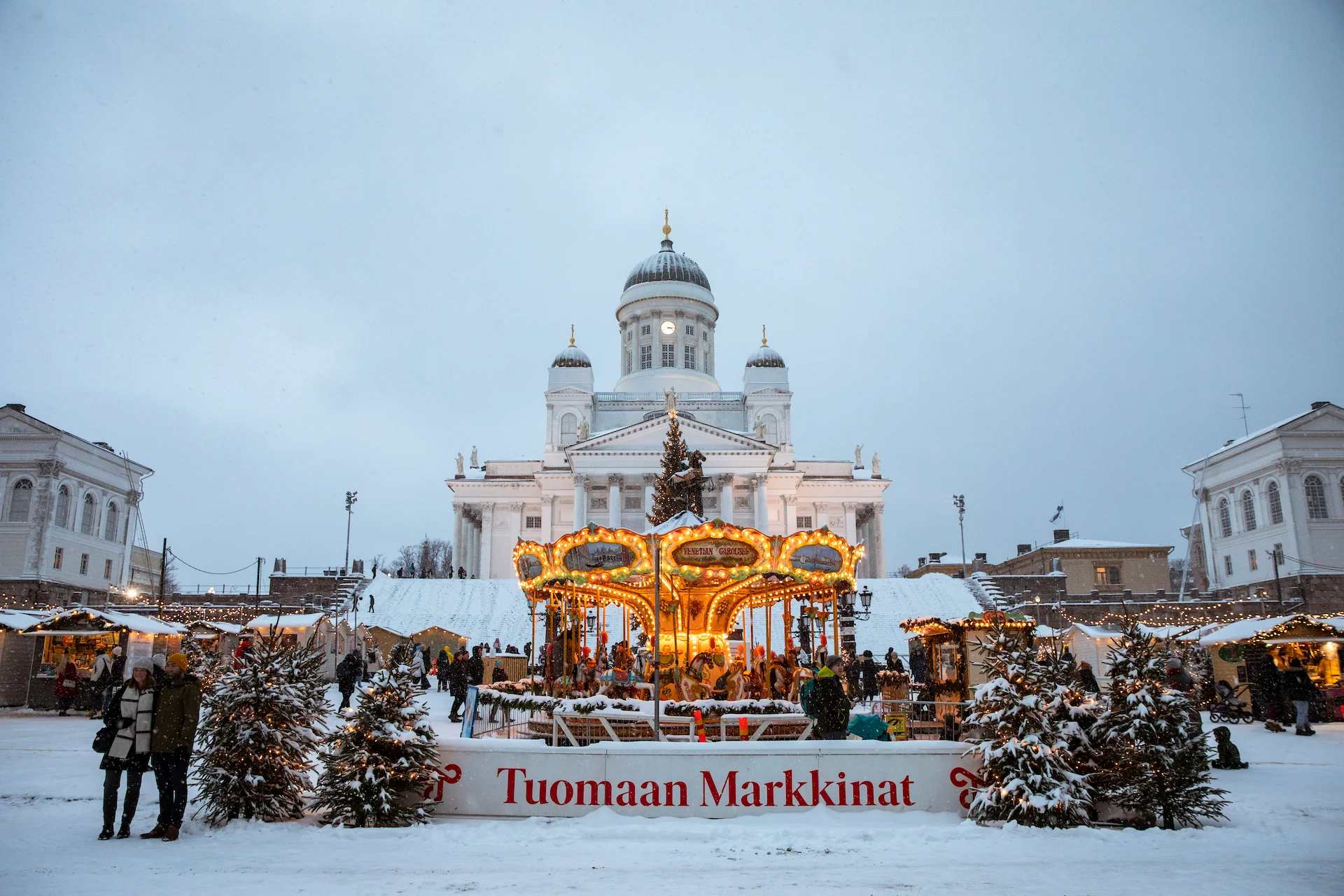
Helsinki, Tuomaan Markkinat, Senate Square. Around 120 wooden huts arranged beneath Helsinki Cathedral, with a strict policy favouring handmade Finnish products over imported tat. There is an old-fashioned carousel for children and, genuinely, a pop-up sauna. Glögi here is spiced blackcurrant or berry rather than wine-based, served with almonds and raisins. Pair it with a proper winter itinerary for Helsinki and you have a faultless three-day break.
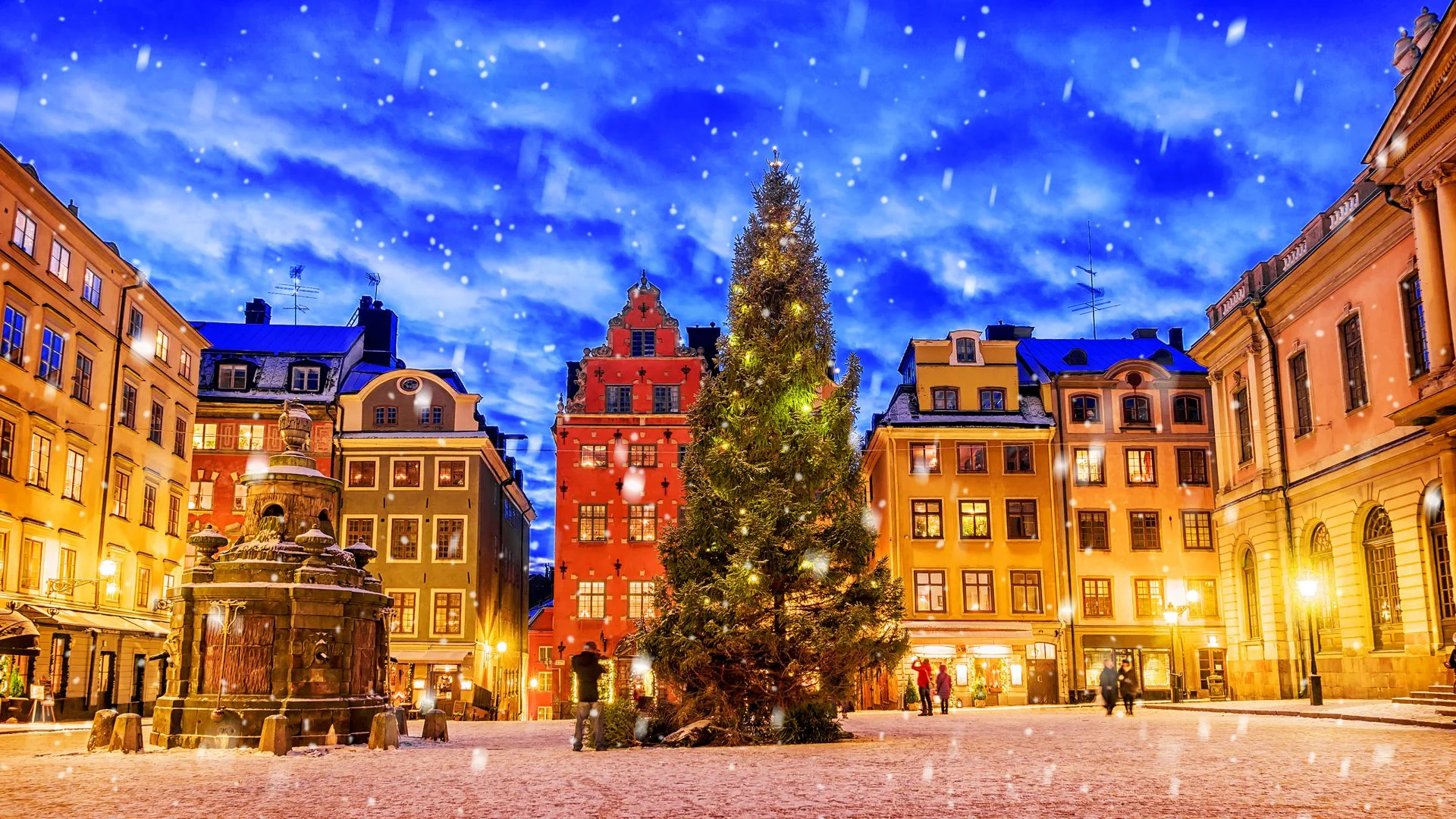
Stockholm, Stortorget and Skansen. Stortorget's small cluster of red huts, framed by ochre and rust-coloured 18th-century merchant houses, is the image most people picture when they think of a Swedish julmarknad. It is compact, don't expect hours of browsing. Skansen, the open-air museum on Djurgården, runs the larger and more traditional market with historic buildings, livestock and folk demonstrations. Visit Sweden's guide to Swedish Christmas markets also flags Gothenburg's Liseberg market, which is arguably the single most spectacular light display in the Nordics.
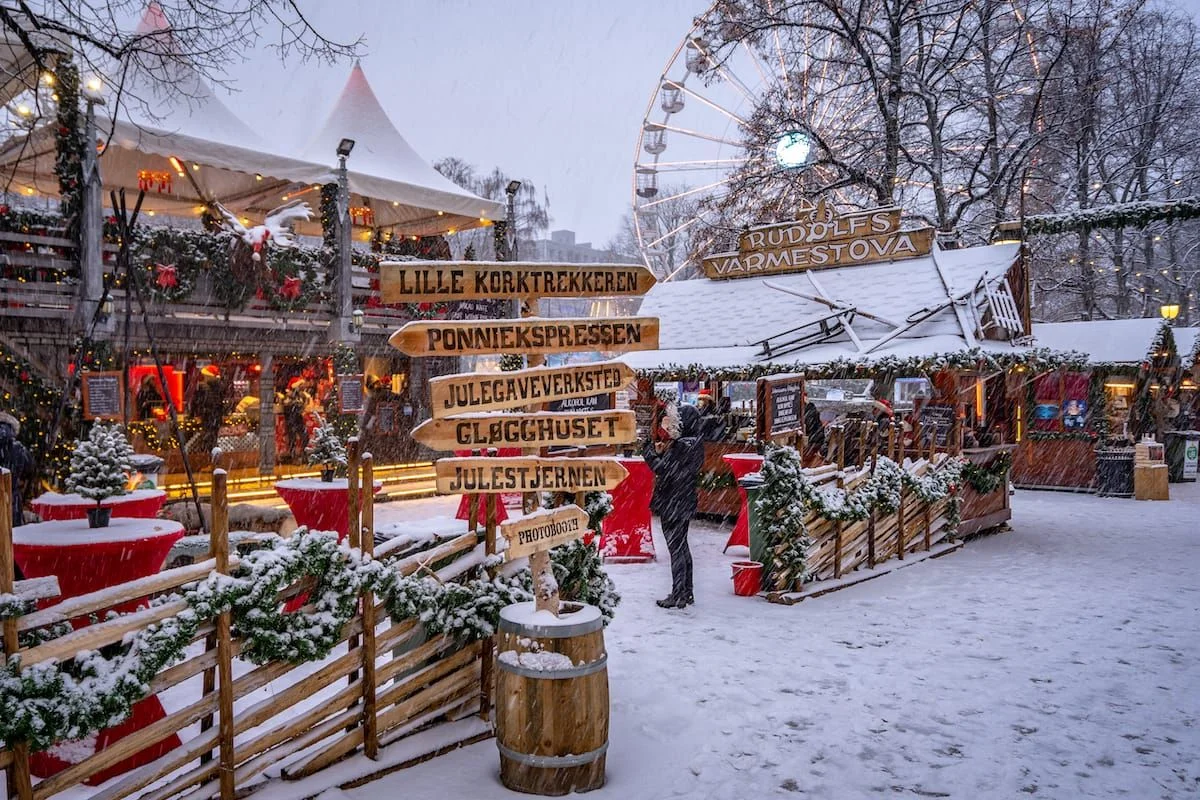
Oslo, Jul i Vinterland at Spikersuppa. Norway's capital turns the park between Karl Johans gate and the National Theatre into a winter fairground: around 100 stalls, a free-to-use ice rink (skate hire is paid), a Ferris wheel and amusement rides. Bergen's Festplassen market and its enormous gingerbread town are worth a detour if you are already travelling the coast.
Copenhagen, Tivoli Gardens, Nyhavn and Kongens Nytorv. Tivoli is the headline act, and deservedly so: thousands of lights, fir-lined avenues, rides running through December and a market that feels designed rather than assembled. Nyhavn's canal-side stalls give you the postcard shot. Odense adds the H.C. Andersen fairytale market if you want to pair it with a first-timer's Copenhagen itinerary.
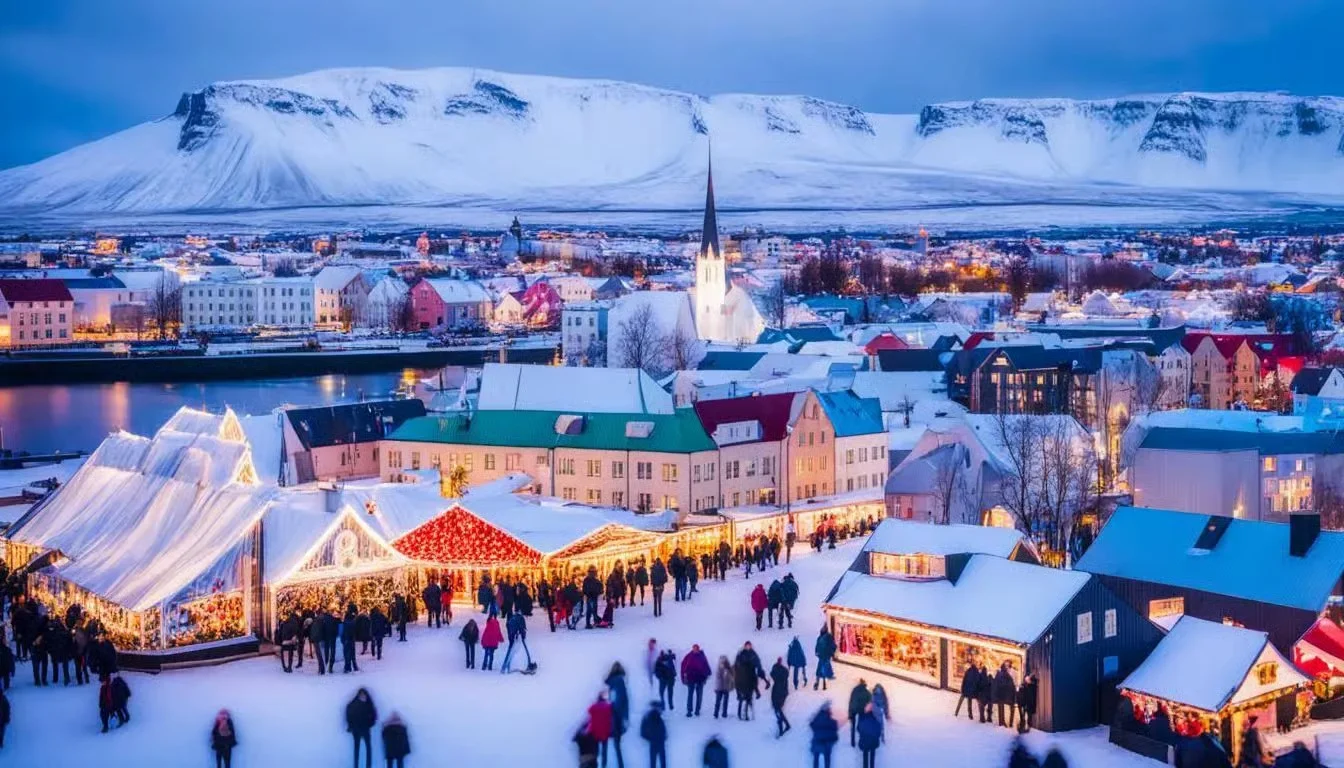
Reykjavík, Yule Town and Hafnarfjörður. Smaller and stranger, in the best way. Iceland has 13 Yule Lads rather than one Santa, and the Christmas Village at Hafnarfjörður a short bus ride from the capital leans hard into Icelandic folklore. Add a northern lights hunt and you have a trip no German market can match.
If I had to send one first-timer to one market, it would be Helsinki. Nowhere else can you browse handmade birch-bark crafts, eat salmon soup, then sit in a sauna in the same square.
When do Nordic Christmas markets open and close?
Most Nordic Christmas markets open in the final week of November and close between 23 and 30 December. A handful of the larger attraction-based markets, including Tivoli and Liseberg, run slightly longer into early January.
| Market | Typical opening | Typical closing |
|---|---|---|
| Helsinki (Tuomaan Markkinat) | Late November | Around 22 December |
| Stockholm Stortorget | Late November | 23 December |
| Skansen, Stockholm | Late November (weekends) | Mid/late December |
| Oslo Jul i Vinterland | Mid/late November | Early January |
| Copenhagen Tivoli | Mid November | Early January |
| Reykjavík Yule Town | Late November | Around 23 December |
Always confirm exact 2026 dates before booking flights. Skansen and several Swedish heritage markets operate weekends only, which catches people out. A common mistake I correct every year: booking a Tuesday-to-Thursday trip to Stockholm hoping to see Skansen, then arriving to a closed gate.
How much does it cost to visit Nordic Christmas markets from the UK?
As a realistic estimate for three nights in December 2026, budget £450,£650 per person for Copenhagen, Oslo or Stockholm, £500,£700 for Helsinki, and £600,£900 for Reykjavík. These figures assume return flights from a London or regional UK airport, a mid-range central hotel on a twin-share basis, and daily spending on food and drink.
Rough per-person daily costs on the ground:
- Mulled wine (glögg/glögi/gløgg): £4,£7 a cup
- Market hot food (sausage, salmon soup, waffle): £8,£14
- Sit-down casual dinner: £25,£40
- 24/72-hour public transport pass: £8,£20
- Tivoli or Liseberg entry: roughly £12,£20 per adult
Norway and Iceland are consistently the most expensive for food and alcohol. Finland and Denmark sit in the middle, but Helsinki is free to enter. If budget is your deciding factor, Helsinki and Copenhagen usually deliver the most market for the money.
Choose by budget: if you want the cheapest credible Nordic market weekend, fly to Copenhagen or Helsinki midweek in the first week of December. If cost is secondary and you want the most unusual trip, Reykjavík wins.
How do I get from the UK to Nordic Christmas markets the cheapest way?
The cheapest route is almost always a direct low-cost flight from a UK airport into Copenhagen, Oslo Gardermoen, Stockholm Arlanda, Helsinki Vantaa or Keflavík, booked eight to twelve weeks out for a midweek departure. Flight time from London is roughly 1h50 to Copenhagen and 3h to Helsinki.
Practical ways to cut the cost:
- Fly Tuesday to Friday. Saturday departures in December carry the steepest premium.
- Check regional airports. Manchester, Edinburgh and Birmingham all serve Nordic capitals directly in winter, often cheaper than Heathrow once you add rail fares.
- Avoid the 18-22 December window. You are competing with everyone travelling home for Christmas.
- Use airport trains, not taxis. The Flytoget from Oslo airport and Helsinki's I/P ring rail line are fast and inexpensive.
- Let me price it as a package. Flights, hotel and transfers booked together are frequently cheaper than assembling them yourself, and the whole thing becomes ATOL protected rather than a collection of unprotected bookings.
Edge case: if you are already heading to Lapland, fly into Helsinki, do Senate Square for a day, then continue north. My guide to planning a first Nordic holiday from the UK covers how to sequence that properly.
Which Nordic country has the best Christmas market atmosphere?
For pure atmosphere, Sweden takes it on tradition and Denmark takes it on spectacle. Stockholm's Gamla Stan delivers narrow cobbled lanes, candle-lit windows and a market that has run in some form since the 1800s; Copenhagen's Tivoli delivers a designed, immersive winter wonderland that children and adults both fall for.
- Most traditional: Sweden (Stortorget, Skansen)
- Most magical for families: Denmark (Tivoli)
- Most authentically local, least touristy: Finland (Helsinki, Turku Old Great Square)
- Best for outdoor winter fun: Norway (ice rink, rides, Bergen gingerbread town)
- Most unusual: Iceland (Yule Lads, aurora, Hafnarfjörður)
Several travel publications and the Nordic Museum's overview of cosy winter markets consistently place these Nordic markets alongside the famous German and Austrian ones, and round-ups such as this guide to Europe's best Christmas markets regularly include Copenhagen and Stockholm. The Nordic advantage is scale: fewer crowds, more handmade stock, better odds of snow.
What's the difference between Swedish and Norwegian Christmas markets?
Swedish markets are craft- and tradition-led, built around heritage sites, handmade goods and food stalls; Norwegian markets lean more towards outdoor activity and fairground entertainment alongside the stalls. Both serve mulled wine, but the accompaniments differ.
| Sweden | Norway | |
|---|---|---|
| Typical setting | Historic squares, open-air museums | City parks with rides and rinks |
| Signature drink | Glögg, often with almonds and raisins | Gløgg, frequently non-alcoholic versions |
| Food to try | Saffron buns, pepparkakor, julskinka | Pinnekjøtt, brunost, reindeer sausage |
| Craft focus | Dala horses, textiles, straw ornaments | Wood carving, knitwear, pewter |
| Extras | Folk music, Lucia processions | Ice skating, Ferris wheel, gingerbread town |
| Cost level | Moderate, high | High |
Exeter International's overview of Scandinavian Christmas markets notes a similar split in emphasis. If you want shopping and tradition, choose Sweden. If you are travelling with teenagers who need something to do, choose Norway.
Can you do multiple Nordic Christmas markets in one trip?
Yes, and two cities in five to six nights is the sweet spot. The best pairings use short flights or the overnight ferry rather than long overland journeys in winter.
Workable combinations:
- Stockholm + Helsinki (5-6 nights): overnight Baltic ferry in one direction, flight back. My favourite of the lot.
- Copenhagen + Stockholm (5 nights): frequent one-hour flights, or a direct train if you prefer.
- Oslo + Bergen (6 nights): the Bergen Railway in snow is an experience in itself.
- Helsinki + Rovaniemi (6-7 nights): market plus Santa Claus Village, huskies and aurora. See my 3-day Rovaniemi winter itinerary for how that second half looks.
Three capitals in a week is possible but you will spend most of it in transit and airports. Daylight is short in December, Helsinki gets roughly six hours, so losing half a day to a flight costs more than it does in summer. I build multi-country Nordic escapes regularly and the honest advice is: fewer cities, more evenings.
Which Nordic Christmas market is best for families with kids?
Copenhagen's Tivoli Gardens is the strongest family choice, because it combines a Christmas market with rides, indoor venues and warm places to retreat when small hands get cold. Oslo's Jul i Vinterland is a close second thanks to the free ice rink and fairground.
- Under 6s: Tivoli (Copenhagen) or Helsinki's Senate Square carousel, both compact, both with quick indoor escapes.
- Ages 6-12: Oslo for skating and rides; Rovaniemi if Santa himself is non-negotiable.
- Teenagers: Stockholm for shopping and food, Reykjavík for aurora and geothermal pools.
Practical parent tip: Nordic cafés are universally pushchair-friendly and most have changing facilities. Build a warm-up stop into every 90 minutes outdoors. If Lapland is on your list, my guides on whether Christmas is the best time to visit Lapland and Lapland Christmas holidays for UK families answer the questions I get asked most.
Are Nordic Christmas markets crowded during peak season?
They are busy but rarely oppressive. Compared with Nuremberg or Strasbourg, Nordic markets are noticeably calmer. The crowded windows are predictable: weekend afternoons from the first Saturday of December onwards, and the three days before Christmas Eve.
Quietest times to visit:
- Weekday mornings, 11:00-13:00
- The first week of December, before Swedish and Finnish office parties begin
- Reykjavík and Turku, which stay comparatively relaxed throughout
Busiest: Tivoli on a December Saturday evening, and Stockholm's Stortorget around 15:00 when the light is perfect and every photographer in the city knows it.
How cold is it, and what should I pack for a Nordic Christmas market trip?
Expect roughly -5°C to -15°C in Helsinki, Oslo and Stockholm during December, 0°C to -5°C in Copenhagen, and -2°C to +3°C with strong wind in Reykjavík. Wind chill and ice matter more than the raw temperature.
Pack this and you will be comfortable:
- Merino or synthetic thermal base layers (not cotton)
- Mid-layer fleece or wool jumper
- Windproof, water-resistant outer coat with a hood
- Insulated waterproof boots with deep tread
- Ice cleats or grips, the single most useful £10 you will spend
- Wool socks, thick gloves, hat, neck gaiter
- Lip balm and hand cream; the dry cold is brutal
- Power bank (cold drains phone batteries fast)
- Contactless card, all five countries are effectively cashless
Reykjavík's maritime climate feels colder than the thermometer suggests because of wind and damp. For a full breakdown of conditions by month, see my guide to Lapland in November, December, January and February.
Which Nordic Christmas market has the best food and mulled wine?
Helsinki has the best market food overall, and Sweden has the best mulled wine tradition. Finnish stalls serve proper lohikeitto (salmon soup), reindeer sandwiches, karjalanpiirakka and berry-based glögi that even non-drinkers enjoy. Swedish glögg, mulled with cardamom, cinnamon, almonds and raisins, is the version most people fall in love with.
Order this in each city:
- Helsinki: salmon soup, grilled sausage with mustard, blackcurrant glögi
- Stockholm: saffransbullar, pepparkakor, glögg with almonds
- Oslo: pinnekjøtt, brunost waffles, gløgg
- Copenhagen: æbleskiver with icing sugar and jam, gløgg
- Reykjavík: kleina, smoked lamb, hot chocolate with Icelandic cream
Round-ups like this European Christmas market comparison and regional market directories are useful for checking what each market specialises in before you go.
Are Nordic Christmas markets worth visiting in December?
Yes, provided you want atmosphere rather than volume. Nordic markets are smaller than their German counterparts, so if your measure of success is a thousand stalls, you may be disappointed. If you want snow, handmade goods, excellent food, short queues and the genuine possibility of northern lights, they are the better choice.
Who should book one: couples wanting a short, design-led city break; families who want Christmas atmosphere without theme-park scale; anyone combining a market with aurora hunting or Lapland.
Who should skip it: travellers on a very tight budget, people who dislike cold and ice, and anyone needing long daylight hours for photography.
A Scandinavian three-capitals market trip is a well-trodden route for a reason. Pair it with a Norwegian northern lights trip from the UK and you get two bucket-list experiences in one booking.
What's included in Nordic Christmas market packages from the UK?
A properly built package from me typically includes return flights, central hotel accommodation, private or shared airport transfers, pre-booked market-adjacent experiences, and full financial protection. What it does not include is a coach full of strangers and a fixed itinerary.
What I handle:
- Tailor-made Nordic and Scandinavian holidays matched to your travel style, interests and pace
- Practical travel arrangements: flights, transfers, rail and ferry legs, luggage logistics
- Handpicked Nordic experiences: sauna evenings, food tours, aurora excursions, design-district walks beyond the usual tourist highlights
- Local knowledge from Finland on which markets are worth your limited daylight and which are not
- Book with confidence: as part of The Independent Travel Consultants from Jamie Wake Travel, bookings are protected by Protected Trust Services and ATOL where applicable
Frequently asked questions
When is the best week to visit a Nordic Christmas market? The first full week of December. Markets are fully open, crowds are thinner than mid-month, and flight prices have not yet climbed toward the Christmas peak.
Do Nordic Christmas markets accept cash? Rarely needed. Finland, Sweden, Norway, Denmark and Iceland are all close to cashless, and virtually every stall takes contactless cards. Carry a small amount of local currency as backup only.
Is there snow at Nordic Christmas markets in December? Likely in Helsinki, Stockholm, Oslo and Lapland; less reliable in Copenhagen and Reykjavík, where coastal conditions often bring rain or sleet instead.
How many days do I need for a Nordic Christmas market break? Three nights is enough for one city and its market. Five to six nights lets you combine two cities comfortably without rushing.
Can I see the northern lights on a Christmas market trip? Not from Helsinki, Stockholm or Copenhagen. Reykjavík, Tromsø and Finnish Lapland give you a realistic chance, so combine the market with a few nights further north.
Which market is best for buying genuine handmade gifts? Helsinki's Tuomaan Markkinat, because stallholders must sell their own handmade or Finnish-made products. Skansen in Stockholm is a close second.
Are the markets accessible for wheelchairs and pushchairs? Largely yes. Oslo, Copenhagen and Helsinki have flat, paved market areas. Stockholm's Gamla Stan cobbles are the trickiest surface, especially when icy.
Is a package better than booking flights and hotels separately? For December travel, usually yes. A package booked through a UK-accredited agent gives you one point of contact if weather disrupts flights, plus ATOL protection that separate DIY bookings do not provide.
Do I need travel insurance for a Nordic winter break? Yes. Winter weather disruption, icy-pavement injuries and cancelled excursions are the three most common claims. Check that your policy covers winter activities if you plan dog sledding or snowmobiling.
Conclusion: planning your festive Nordic winter break
The best Nordic Christmas markets for a festive winter break from the UK reward people who choose deliberately rather than broadly. One city done properly beats three done at speed, and December daylight will punish an over-packed itinerary.
Your next steps:
- Pick your priority, tradition (Stockholm), family spectacle (Copenhagen), local authenticity (Helsinki), activity (Oslo) or the unusual (Reykjavík).
- Fix your dates for the first two weeks of December, midweek if possible, and confirm the market's published 2026 opening dates before booking flights.
- Decide one city or two. If two, use the Stockholm, Helsinki overnight ferry or a one-hour hop rather than long overland legs.
- Book transfers and key experiences early. Sauna slots, aurora tours and Tivoli-adjacent hotels sell out first.
- Get it protected. Bring me your dates and rough budget and I will build the itinerary around your travel style, interests and pace.
I plan tailor-made Nordic and Scandinavian holidays for UK travellers from my base in Helsinki, which means the recommendations you get are tested rather than researched. If you would like a Nordic Christmas market itinerary built around what you actually enjoy, get in touch and let me plan it with you.