
A 12–14 Night Denmark, Sweden & Norway Itinerary for First-Time Visitors
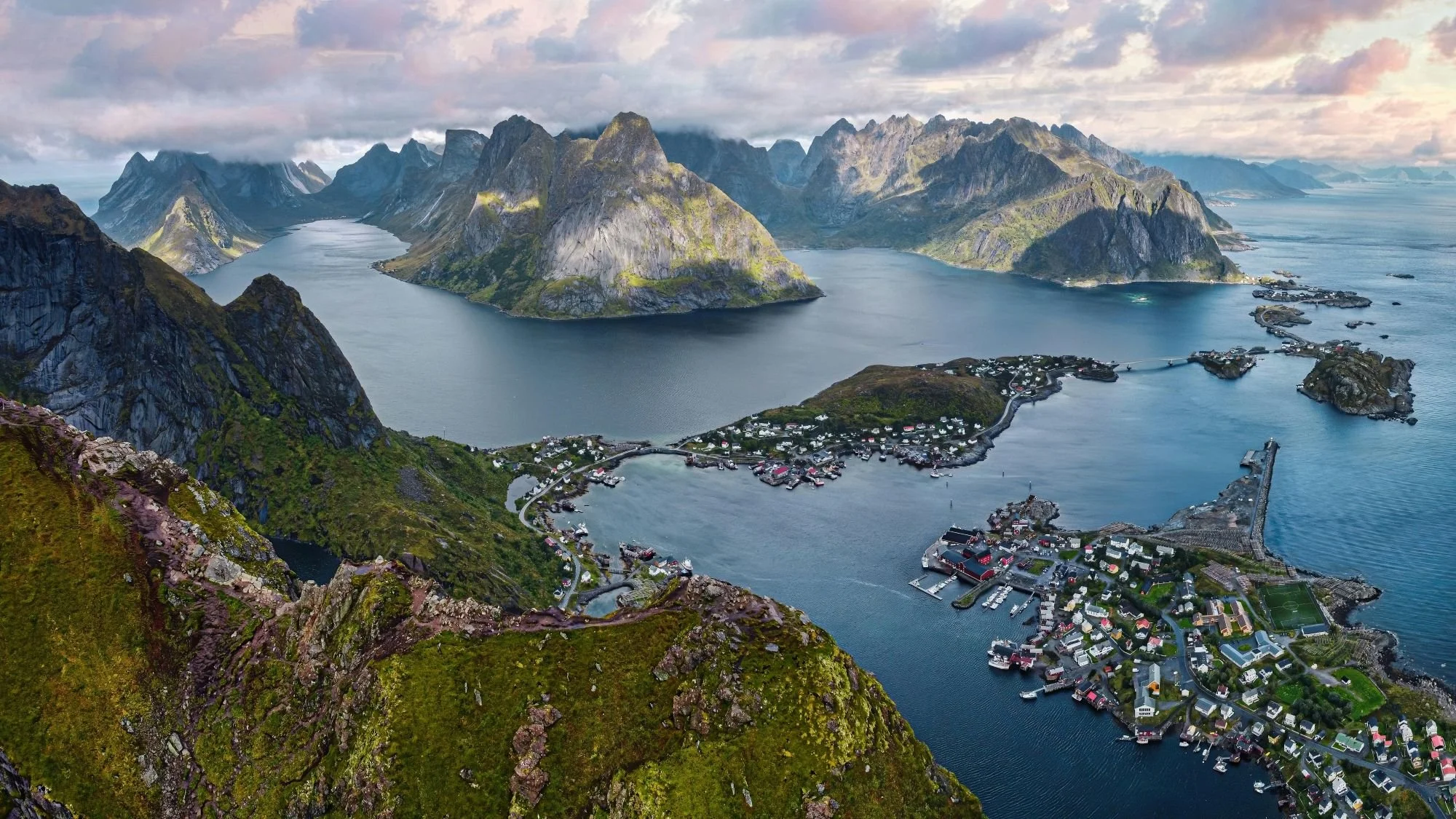
Photo: Norway’s Lofoten Islands
Planning your first Scandinavia travel itinerary can feel surprisingly difficult. Copenhagen, Stockholm, Oslo, the Norwegian fjords and countless islands all compete for your attention. Yet a first Nordic holiday does not need to cover everything. In fact, choosing fewer places and giving yourself time to enjoy them often creates a far better trip.
Scandinavia is wonderfully suited to a multi-centre holiday. Denmark, Norway and Sweden each have their own character, while comfortable transport makes it possible to combine several stops without spending your whole holiday in transit.
The key is getting the pace right.
Whether you dream of colourful Copenhagen streets, Stockholm’s waterside neighbourhoods or Norway’s dramatic fjords, this guide will help you create a Scandinavia travel itinerary that feels rewarding rather than rushed.
What counts as Scandinavia?
Before planning your route, it helps to clear up one common source of confusion.
Scandinavia traditionally refers to Denmark, Norway and Sweden. The wider Nordic region also includes Finland and Iceland, together with the Faroe Islands, Greenland and Åland.
For a first holiday, Denmark, Sweden and Norway make a natural combination. They give you three distinct cultures, three fascinating capitals and easy access to coast, islands, mountains and fjords.
You do not need to visit all three.
For example, a week could work beautifully in Denmark and Sweden. With two weeks, you have more freedom to add Norway and travel beyond its capital.
The best itinerary is not the one with most stops. It is the one that gives you the experiences you actually came for.
How many days do you need for a Scandinavia travel itinerary?
For most first-time visitors, 10 to 14 nights is an excellent starting point.
That gives you enough time to experience several destinations without packing and unpacking every day. You can also build in slower mornings and spontaneous afternoons.
Seven nights can still work well. In that case, though, I recommend limiting your holiday to one or two countries.
A simple guide is:
7 nights: Copenhagen and Stockholm
10 nights: Copenhagen, Stockholm and Oslo
12 nights: Copenhagen, Stockholm, Oslo and a fjord experience
14 nights: all three capitals plus Bergen and the Norwegian fjords
Allow at least three nights in major cities when possible.
Two nights often means only one full sightseeing day. By adding a third, you give yourself time to explore neighbourhoods, enjoy a long lunch or change plans if the weather has other ideas.
This is your holiday, not a race across a map.
A suggested 12 to 14-night Scandinavia travel itinerary
For a first visit, a route through Copenhagen, Stockholm, Oslo and Bergen gives you a strong introduction to the region.
It mixes capital cities with nature and avoids repeating the same type of experience at every stop.
Here is how it could work.
Copenhagen, Denmark: 3 nights
Copenhagen makes a gentle introduction to Scandinavia.
The centre is compact, public transport is straightforward and many of the city’s pleasures are found simply by walking between its canals, historic streets and neighbourhood cafés. VisitDenmark highlights familiar sights including Nyhavn, Tivoli, Strøget and Amalienborg among the capital’s main attractions.
Start with the historic centre, but do not spend your whole stay ticking off landmarks.
Walk along the harbour. Explore Christianshavn. Stop for coffee and something sweet at a bakery. Then spend time noticing the everyday design, cycling culture and relaxed rhythm that make Copenhagen distinctive.
If you have three nights, you can explore without rushing.
Your Copenhagen stay might include:
Nyhavn and the harbourfront
Amalienborg Palace
Tivoli Gardens
Christianshavn
Torvehallerne food market
A canal cruise
Time for Danish pastries and good coffee
There is also room to personalise your stay.
Food lovers may want restaurant reservations built into the itinerary, while families might give Tivoli more time. Design enthusiasts can focus on architecture, interiors and museums.
And if Copenhagen immediately makes you want to stay longer, that is perfectly normal.
Stockholm, Sweden: 3 nights
Next, continue to Stockholm.
Sweden’s capital spreads across islands, so water is never far away. The result is a city where historic streets, museums, parks and boat trips fit naturally together.
Begin in Gamla Stan, Stockholm’s Old Town. Its medieval street plan, narrow lanes and historic squares make it an obvious first stop, while the Royal Palace and Stortorget sit nearby.
Then contrast the old city with Stockholm’s greener side.
Djurgården offers museums and open space close to the centre, while the city’s waterfront makes even an ordinary journey feel part of the holiday.
Stockholm rewards curiosity.
Consider including:
Gamla Stan
The Royal Palace
Djurgården
The Vasa Museum
A traditional fika stop
A boat trip
One evening reserved for a special dinner
If you visit during the warmer months, consider adding time in the Stockholm archipelago.
The archipelago contains around 30,000 islands, skerries and rocks, with ferries providing easy access from the city. Fjäderholmarna is one of the closest options, making an island experience possible even when your itinerary is fairly tight.
That contrast is one of Stockholm’s strengths.
You can spend the morning among city streets and museums, then find yourself beside open water later the same day.
Oslo, Norway: 2 nights
Oslo is often treated merely as the gateway to Norway’s mountains and fjords.
It deserves more attention than that.
Modern architecture sits beside the Oslofjord, while museums, waterfront spaces and wooded hills make nature unusually accessible for a capital city.
Two nights can work if you are continuing deeper into Norway. Three is better if you want a slower city stay.
Depending on your interests, consider:
The Oslo waterfront
The Opera House
MUNCH
Vigeland Sculpture Park
Bygdøy
A sauna experience
Restaurants around the city centre and harbour
Norway is where your Scandinavia travel itinerary can begin to change pace.
After several capital-city stays, moving towards the mountains and fjords creates a welcome contrast.
And that is where the trip often becomes unforgettable.
Bergen and the Norwegian fjords: 3 to 4 nights
If Norway’s scenery is one of your main reasons for travelling, do not stop at Oslo.
Continue west towards Bergen.
The Bergen Railway links Oslo with western Norway and gives you an opportunity to see changing landscapes as you cross the country. Bergen then provides an excellent base for exploring the fjord region.
Bergen itself deserves time too.
Bryggen, the historic Hanseatic wharf, is a UNESCO World Heritage Site, while Mount Fløyen, the fish market and the city’s narrow streets are among its best-known attractions. Visit Norway also positions Bergen as a natural gateway for fjord experiences.
Spend at least two nights here if your schedule allows.
Then decide how deeply you want to explore the fjords.
Some travellers prefer a scenic day trip before returning to Bergen. Others enjoy adding an overnight stay in a smaller fjord community, where evenings and early mornings feel very different from a busy sightseeing day.
A Bergen and fjord stay could include:
Bryggen
Fløibanen and Mount Fløyen
Bergen’s waterfront
A fjord cruise
Scenic railway journeys
Flåm
An overnight fjord stay
The Bergen, Flåm and Oslo corridor can combine historic cities, rail travel and fjord scenery within the same journey.
This part of the holiday deserves breathing room.
Do not squeeze an ambitious fjord journey between two flights simply to say you have seen it.
Should you travel around Scandinavia by train or plane?
Both can make sense.
The right answer depends on your route, available time and how much you enjoy the journey itself.
Trains are often an excellent choice between major cities and within individual countries. They can take you from city centre to city centre without airport transfers, and they turn travel time into part of the experience.
Flights can be useful for longer jumps.
For instance, if you have limited time and want to combine Stockholm with western Norway, flying may protect a valuable holiday day.
Ferries can also create memorable connections.
Rather than asking whether rail or air is always better, look at each leg individually. A carefully planned Scandinavia travel itinerary may use trains, ferries and flights in the same holiday.
That can be the most comfortable option.
Do you need to book everything in advance?
Not every hour needs a reservation.
Some things do.
Flights, preferred hotels and major rail journeys are sensible priorities, particularly during popular travel periods.
Special restaurants may also need advance booking. The same applies to certain guided experiences, scenic transport and fjord trips.
Leave some gaps in your diary, though.
You might discover a neighbourhood you want to explore for longer. The weather may be perfect for an unplanned boat trip. Or perhaps a slow lunch becomes more appealing than another museum.
A good Scandinavia travel itinerary gives you structure without controlling every minute.
That balance makes a holiday feel personal.
Common first-time Scandinavia planning mistakes
The biggest mistake is trying to see too much.
It is tempting to look at the map and think that because Copenhagen, Stockholm and Oslo are all in the same part of Europe, you should add Helsinki, Iceland and perhaps Lapland too.
Soon, your holiday becomes a series of departures.
Choose depth over distance.
Other common mistakes include:
Staying only one or two nights everywhere
Underestimating travel time between destinations
Booking hotels based only on price
Planning a fjord visit with too little time
Assuming every Nordic destination offers the same experience
Filling every day from breakfast until dinner
Forgetting to check seasonal transport and opening times
Leaving popular experiences until the last minute
There is another easy mistake to make.
Some travellers plan only around famous sights and forget to leave room for everyday Nordic life.
A bakery breakfast, harbour walk or quiet ferry journey can become just as memorable as the landmark you booked months earlier.
Should you add Finland or Iceland?
You can, but you do not need to.
Finland and Iceland are Nordic countries rather than part of Scandinavia in the strict geographical and cultural sense. Both are fantastic holiday destinations, yet adding them changes the scale of your journey.
If you have three weeks, Helsinki could fit comfortably into a broader Nordic itinerary.
Iceland often works better as its own holiday, particularly if you want to explore beyond Reykjavík.
Trying to combine five Nordic countries in two weeks usually means sacrificing time on the ground.
Ask yourself one question: are you adding another country because you genuinely want to experience it, or because it happens to look close on the map?
Your answer can save several days of unnecessary travel.
How to make your first Scandinavia travel itinerary feel more personal
A perfect itinerary looks different for every traveller.
One couple might want Copenhagen restaurants, Stockholm design and a boutique hotel beside a Norwegian fjord. A family may prefer Tivoli, interactive museums and easy transport with fewer hotel changes.
Another traveller may care most about rail journeys and scenery.
This is where tailor-made planning becomes valuable.
Instead of starting with a fixed package and trying to make yourself fit it, you can build the holiday around how you actually like to travel.
Consider questions such as:
Do you prefer busy mornings or leisurely starts?
How often are you comfortable changing hotels?
Is food an important part of your holiday?
Would you rather take a scenic train or save time by flying?
Do you enjoy guided tours?
Would you like countryside and nature between city stays?
Are boutique hotels more appealing than large international properties?
Is there one experience you would regret missing?
Your answers shape everything from route to room choice.
And those small decisions can transform the whole trip.
Mike @ Nordic Travel Table Says
“Your first Scandinavia holiday does not need to include everything. Give yourself time to enjoy each place, choose the experiences that matter to you and let the journey between destinations become part of the trip.”
A slower alternative for 10 nights
Perhaps three countries still sounds too busy.
That is completely fine.
A 10-night Copenhagen and Stockholm holiday could be every bit as rewarding, particularly if you include day trips or an archipelago stay.
For example:
4 nights Copenhagen
1 night in southern Sweden or an extra Copenhagen night
4 nights Stockholm
1 night in the Stockholm archipelago
This gives you much more unstructured time.
You could visit a museum because it interests you rather than because it has been squeezed into a two-hour gap.
Slow travel works particularly well here.
A nature-focused alternative for 12 nights
If scenery matters more than capital cities, spend less time crossing Scandinavia and more time in Norway.
You might start with two or three nights in Copenhagen before flying or travelling onwards to Norway.
Then divide the remaining time between Oslo, Bergen and the fjord region.
For example:
3 nights Copenhagen
2 nights Oslo
2 nights Bergen
2 nights in a fjord destination
2 or 3 additional nights for scenic travel or another Norwegian stop
This route gives nature room to take centre stage.
It also means fewer border crossings and less time spent reaching the next capital.
A city-focused alternative for 9 nights
If this is your first Nordic holiday and you mainly want culture, food and city life, keep things simple.
Spend three nights in each Scandinavian capital.
A nine-night Scandinavia travel itinerary could be:
3 nights Copenhagen
3 nights Stockholm
3 nights Oslo
That is enough time to discover the personality of each city without making the journey too complicated.
You can always return for the fjords.
In fact, Scandinavia often works better as several great holidays rather than one enormous trip.
Why tailor-made planning works so well in Scandinavia
Scandinavia gives travellers an enormous amount of choice.
That is part of its appeal, but it can also make online planning frustrating.
Should you take a train or fly? Is three nights enough in Stockholm? Which fjord route suits your dates? Where should you stay if you want to walk to restaurants in the evening?
Online searches can give you hundreds of answers.
A personal travel consultant can turn those choices into one coherent holiday.
Nordic Travel Table can tailor your route around your available time, preferred pace, interests and budget. That might mean choosing hotels with the right location, matching transport connections carefully or adding experiences you may not have discovered on your own.
You still get a holiday that feels like yours.
You simply have someone handling the complicated pieces behind it.
Ready to start planning your Scandinavian holiday?
Your first trip to Scandinavia should leave you wanting to return, not wondering why you spent so much of it checking train times and repacking your suitcase.
Copenhagen, Stockholm and Oslo are an excellent starting point. Add Bergen and the Norwegian fjords when you have enough time, or slow things down and explore just two countries in greater depth.
There is no need to copy somebody else’s route.
The best Scandinavia travel itinerary is built around you.
Nordic Travel Table can help you create a personalised Nordic holiday with carefully chosen accommodation, transport and experiences brought together into one considered journey.
To start planning, contact Nordic Travel Table on +358449028547 or email [email protected].
Your first Nordic journey can start with a simple conversation.
Nordic Travel Table is an Independent Travel Consultant with Jamie Wake Travel (membership number 1088) and so benefits from membership of Protected Trust Services and Jamie Wake Travel’s ATOL Licence. Nordic Travel Table offers a personal travel service and has access to a wide range of suppliers and tour operators. They also tailor-make holidays to suit individual needs. All tailor-made holidays include Supplier Failure Insurance and Scheduled Airline Failure Insurance.